
If you’ve recently had blood work done, you might have noticed two specific tests on your report: CRP and ESR. Often grouped together, these are known as “inflammatory markers.”
But what exactly are they measuring? Is a high result a cause for panic? Let’s break down these essential health indicators in plain English.
What is Inflammation?
Before diving into the tests, it’s important to understand that inflammation isn’t always a bad thing. It is your immune system’s natural response to injury, infection, or irritation.
- Acute Inflammation: This is short-term (like a swollen ankle or fighting off a cold).
- Chronic Inflammation: This is long-term and can lead to health issues like heart disease, autoimmune disorders, or arthritis.
CRP and ESR are the tools doctors use to see if this “fire” is burning somewhere in your body.
1. CRP (C-Reactive Protein)
The CRP test measures a protein produced by your liver. When your body senses a sudden threat—like a bacterial infection or tissue damage—your liver pumps CRP into the bloodstream.
Why it’s used:
- Speed: CRP levels rise and fall quickly. This makes it an excellent “real-time” indicator of how your body is reacting right now.
- Heart Health: A specific version called hs-CRP (high-sensitivity CRP) is often used to assess the risk of cardiovascular disease.
2. ESR (Erythrocyte Sedimentation Rate)
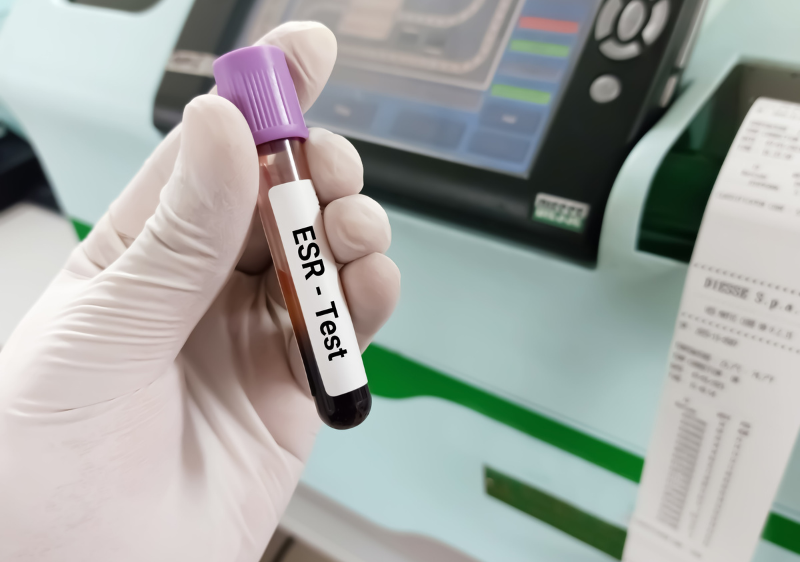
Commonly called a “Sed Rate,” the ESR test is a bit more old-school but still incredibly useful. It measures how quickly red blood cells (erythrocytes) sink to the bottom of a test tube.
How it works:
When there is inflammation in your body, certain proteins cause your red blood cells to clump together. These clumps are heavier than individual cells, so they sink faster.
- Fast Sink Rate: Indicates higher inflammation.
- Slow Sink Rate: Generally indicates normal levels.
What Does a High Result Mean?
A high CRP or ESR result tells your doctor that inflammation is present, but it doesn’t tell them where it is or what is causing it. A “high” result could be caused by many things, including:
- Infections: Viral or bacterial.
- Autoimmune Diseases: Such as Rheumatoid Arthritis or Lupus.
- Injury: Recent surgery or physical trauma.
- Lifestyle Factors: Smoking, obesity, or high stress.
Note: These markers are “non-specific.” Think of them like a smoke detector: they tell you there’s smoke in the house, but they don’t tell you if it’s a burnt piece of toast or a forest fire.
How to Lower Your Inflammatory Markers
If your levels are slightly elevated due to lifestyle rather than a specific disease, you can often lower them by:
- Adopting an Anti-Inflammatory Diet: Focus on leafy greens, berries, fatty fish (Omega-3s), and olive oil.
- Regular Exercise: Consistent, moderate movement is a natural inflammation-fighter.
- Stress Management: High cortisol levels are directly linked to increased CRP.
- Prioritizing Sleep: Your body repairs tissue and regulates immune markers while you sleep.
Final Thoughts
If your lab results show elevated CRP or ESR, don’t jump to conclusions. Your doctor will look at these numbers alongside your symptoms and other tests to get the full picture.
Are you looking to better understand your recent lab results? I can help you draft a list of specific questions to take to your next doctor’s appointment.