
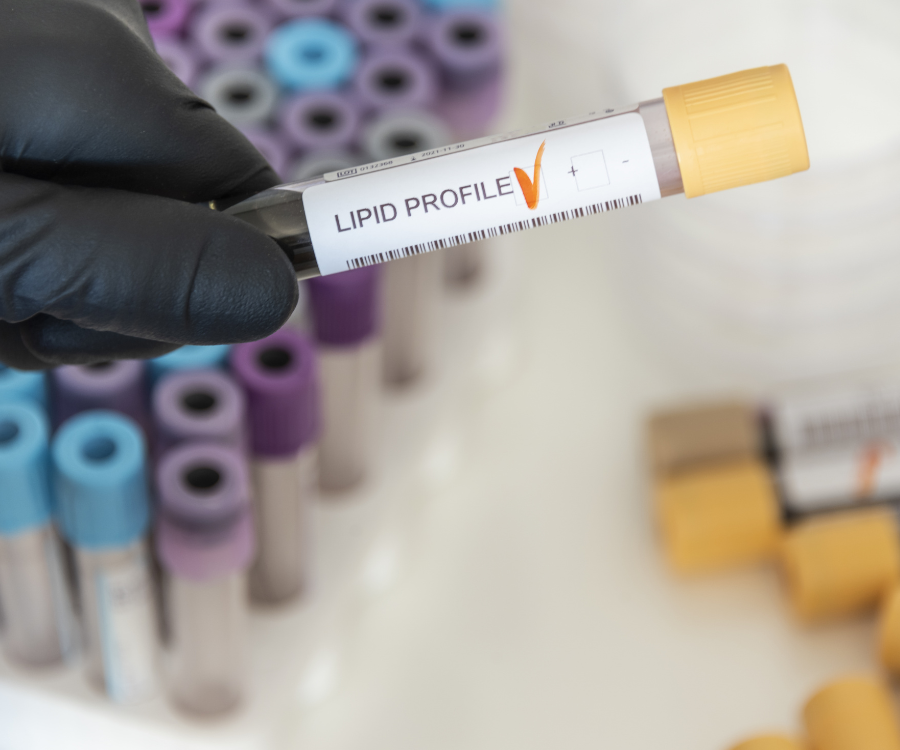
Getting your blood drawn for a routine checkup often ends with a lab report full of medical jargon: LDL, HDL, triglycerides, VLDL, total cholesterol. While it is easy to glance at the numbers and wait for your doctor to say “looks good,” understanding what a lipid profile actually measures puts your cardiovascular health directly into your hands.
A lipid panel is a simple blood test that measures the fats (lipids) circulating in your bloodstream. These molecules are essential for building cell membranes and producing hormones, but when they fall out of balance, they can increase the risk of plaque buildup in your arteries—a condition known as atherosclerosis.
The 5 Core Components of a Lipid Panel
When a laboratory analyzes your blood sample, it breaks down your lipid profile into five primary measurements:
1. Total Cholesterol
Total cholesterol represents the combined estimate of all the cholesterol floating in your blood. It acts as a starting baseline, though it does not tell the whole story on its own. A high total cholesterol score can be misleading if it is driven by high levels of protective HDL (“good”) cholesterol.
2. High-Density Lipoprotein (HDL) — “Good” Cholesterol
Think of HDL as the clean-up crew for your bloodstream. HDL acts like a molecular vacuum cleaner: it picks up excess cholesterol from your artery walls and carries it back to your liver, where it is broken down and eliminated from the body. Higher HDL levels are generally linked to lower cardiovascular risk.
3. Low-Density Lipoprotein (LDL) — “Bad” Cholesterol
LDL transports cholesterol from your liver out to the body’s tissues. While your body needs cholesterol to function, having too much circulating LDL can cause excess particles to lodge into vessel walls, where they oxidize and build up into hard plaques. Over time, this restricts blood flow and raises the risk of heart attacks or strokes.
4. Very Low-Density Lipoprotein (VLDL)
VLDL is another type of “bad” cholesterol particle, but instead of primarily carrying cholesterol, it carries triglycerides. Because directly measuring VLDL is difficult, labs typically estimate VLDL by dividing your triglyceride total by 5 (when measured in mg/dL). High VLDL levels are strongly linked to arterial plaque formation.
5. Triglycerides
Triglycerides are not cholesterol at all; they are the most common type of fat in your body. When you consume more calories than your body burns—especially from refined carbohydrates and alcohol—the excess energy is converted into triglycerides and stored in fat cells. High triglycerides combined with low HDL or high LDL significantly raise cardiovascular risk.
Standard Reference Ranges (mg/dL)
Lab ranges can vary slightly depending on the facility, but standard clinical target ranges for adult lipid panels are outlined below:
| Marker | Optimal / Target Range | At-Risk / High Range |
| Total Cholesterol | Less than 200 mg/dL | 240 mg/dL and above |
| HDL Cholesterol | 60 mg/dL or higher (40+ for men, 50+ for women) | Less than 40 mg/dL (men) / 50 mg/dL (women) |
| LDL Cholesterol | Less than 100 mg/dL | 160 – 189 mg/dL (High) / 190+ mg/dL (Very High) |
| Triglycerides | Less than 150 mg/dL | 200 – 499 mg/dL (High) / 500+ mg/dL (Very High) |
Key Ratios Your Doctor Examines
Looking at single markers only gives part of the picture. Doctors frequently examine calculated ratios to better assess overall heart health:
- Non-HDL Cholesterol: Calculated by subtracting HDL from Total Cholesterol. This accounts for all “atherogenic” (plaque-forming) particles combined, making it one of the most reliable predictors of cardiovascular risk.
- Total Cholesterol to HDL Ratio: Calculated by dividing Total Cholesterol by HDL. A target ratio is usually 5:1 or lower, with an optimal ratio around 3.5:1.
- Triglyceride to HDL Ratio: Dividing triglycerides by HDL provides a quick screen for insulin resistance and particle density. A ratio below 2.0 is ideal.
Do You Need to Fast Before a Lipid Profile?
Historically, lipid tests required a 9 to 12-hour fast because eating recent meals directly inflates blood triglyceride levels, which skews calculated LDL levels.
However, modern guidelines permit non-fasting lipid panels for routine screening in most adults. Non-fasting tests accurately capture HDL, Total Cholesterol, and Non-HDL levels. If your non-fasting triglycerides come back elevated (above 175 mg/dL), your doctor may order a follow-up fasting test for precise confirmation.
Next Steps for Improving Your Lipid Profile
If your results come back outside optimal ranges, simple lifestyle adjustments often make a measurable impact:
- Increase Soluble Fiber: Dietary fiber found in oats, beans, flaxseeds, and apples binds to cholesterol in your digestive system and drags it out before absorption.
- Swap Saturated Fats for Unsaturated Fats: Replacing butter and fatty red meats with olive oil, avocados, nuts, and salmon lowers LDL levels.
- Engage in Regular Aerobic Activity: Moderate exercise (such as brisk walking for 30 minutes a day) boosts protective HDL levels while helping burn off excess triglycerides.
- Limit Refined Sugars & Alcohol: Cutting down on added sugars directly targets and reduces triglyceride counts.